
Asset-Trade News

AKTUELLE PRESSEMITTEILUNGEN

Hier finden Sie alle Pressemitteilungen von Asset-Trade aus den letzten Jahren zu Informationen zu gebrauchten Maschinen.

Bitte beachten Sie, dass unsere Pressemitteilungen nicht immer übersetzt werden. Lesen Sie daher auch andere Sprachen.

1 minute, 47 seconds

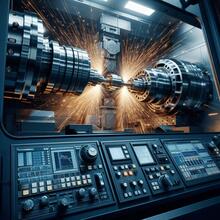
CNC (Computer Numerical Control) lathes are foundational assets in modern manufacturing, automating the precise cutting, drilling, knurling, and shaping of metal, plastics, and wood components. For manufacturing plants aiming to expand their machining capacities, buying used CNC turning centers offers a cost-effective path to acquiring top-tier engineering without the budget constraints of purchasing new systems. In this guide, we discuss the core advantages of pre-owned turning centers, key features to evaluate, and popular brands like DMG Mori, Mazak, and Okuma available in the European market. 1. Advantages of Used CNC Lathes Investing in pre-owned CNC turning centers offers immediate benefits to manufacturing operations: Rapid ROI & Lower CAPEX: Used lathes are significantly less

1 minute, 48 seconds

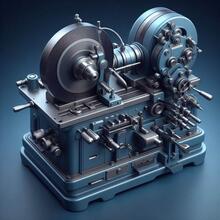
When it comes to maintaining high-performance tools, sharpening machines play a crucial role in industries like metalworking, woodworking, and manufacturing. However, purchasing a brand-new machine can be expensive. That's where used sharpening machines come in as a cost-effective alternative, offering excellent value without sacrificing quality. Why Consider Used Sharpening Machines? Buying a used sharpening machine can save your business a significant amount of money while still providing the functionality you need. These machines are designed to restore the sharpness of various tools such as blades, knives, and cutters. Many of the pre-owned models on the market are well-maintained and still in excellent working condition, making them a smart investment for businesses looking to reduce

0 minutes, 49 seconds

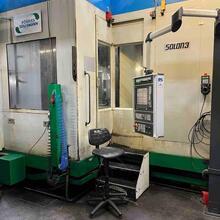
High-capacity boring mills are vital for heavy industrial sectors. Sourcing a used DÖRRIES SCHARMANN Solon 3 with a 7-pallet changer from Germany allows companies to deploy large-format automation immediately, saving significant investment compared to new machine orders. 1. Technical Specifications of the Solon 3 Parameter Specification Pallet Dimensions 800 x 1,000 mm (7-Pallet Pool System) X-Axis Travel (Column Longitudinal) 1,600 mm (optionally up to 2,000 mm) Y-Axis Travel (Spindle Vertical) 1,250 mm Z-Axis Travel (Column Cross) 1,000 mm Spindle Diameter & Taper SK50 / ISO 50 (Heavy spindle standard) Max. Workpiece Weight Up to 2,500 kg per pallet Control System Siemens SINUMERIK 840D or Fanuc CNC Control 2. Sourcing and Logistics Support by Asset-Trade Asset-Trade handles the complete

3 minutes, 29 seconds

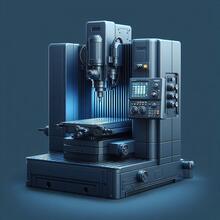
Acquiring a CNC (Computer Numerical Control) machine is one of the most significant capital decisions a manufacturing business can make. From 3-axis vertical mills and multi-axis turning centers to advanced 5-axis systems, CNC machinery automates cutting tool paths, dramatically increasing production speed, reducing human error, and ensuring repeatability. For growing workshops, buying a used CNC machine provides an economic path to high-end automation. This ultimate guide covers the key factors to evaluate, popular control systems, and procurement checklists for used CNC equipment. 1. Selecting the Right Control System The control unit is the brain of the CNC machine. Choosing a control that aligns with your operator's existing skills is critical: Siemens SINUMERIK: Excellent for high

1 minute, 28 seconds

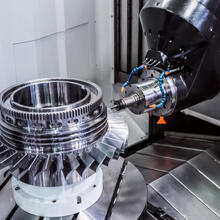
In the precision manufacturing sector, 5-axis CNC machining has revolutionized how complex parts are made. Unlike traditional 3-axis machines that only move a tool in X, Y, and Z axes, a 5-axis machining center utilizes two additional rotational axes (commonly A, B, or C) to manipulate either the tool spindle or the workpiece table. This advanced capability allows workshops to machine complex geometries in a single setup, drastically reducing production times and improving dimensional accuracy. For shops looking to implement 5-axis machining, purchasing a used 5-axis CNC machine from Asset-Trade offers access to premium German and Swiss engineering at a highly competitive price point. 1. Key Advantages of 5-Axis Machining Single-Setup Machining (Done-in-One): Traditional machining requires

3 minutes, 59 seconds

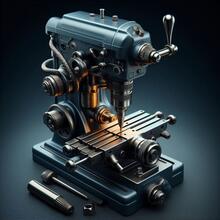
While CNC machines dominate high-volume production, manual and hand milling machines remain indispensable tools in modern manufacturing, prototype development, tooling shops, and training centers. Their mechanical simplicity, rapid setup times, and direct tactile feedback make them ideal for single-part production, repair work, and educational purposes. For workshops looking to expand their machining capabilities without high capital investment, buying a high-quality used manual milling machine (such as a Deckel FP1 or Kunzmann) represents a smart, cost-effective solution. This guide details their benefits, key components, and sourcing strategies. 1. Why Manual Milling Machines are Still Vital Manual mills offer distinct advantages in specific shop environments: Immediate Setup: No

1 minute, 50 seconds

Vertical Machining Centers (VMCs) are the workhorses of the metalworking and precision milling industry. Characterized by a vertically oriented spindle, VMC machines hold the workpiece on a flat table while the cutting tool moves along three linear axes (X, Y, and Z) to remove material. Sourcing a used VMC machine from Asset-Trade offers a highly cost-effective method to scale up production speeds and achieve high-precision outcomes without the heavy capital expenditure of new equipment. This guide covers the technical specifications, popular brands, and inspection checklists for used vertical machining centers in the global market. 1. Key Technical Features of VMC Machines When selecting a used VMC, understanding the spindle power, axis travel, and control system options is essential to

1 minute, 1 second

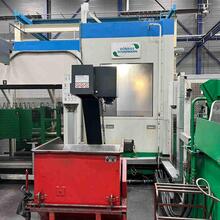
The DÖRRIES SCHARMANN Solon 3 is a heavy-duty horizontal boring mill and machining center engineered for large, complex components requiring multi-station automation. Equipped with a 7-pallet pool system, this machine is designed for continuous, unmanned "lights-out" manufacturing. Sourcing a used DÖRRIES SCHARMANN Solon 3 from Asset-Trade in Krefeld, Germany, provides heavy industrial manufacturers with an economic path to high-end automation. 1. Structural Design & Pallet Automation Pallet Pool System (7 Pallets): Enables long, automated production runs without operator intervention. Parts can be clamped and setup on idle pallets while the machine runs. Rigid Boring Mill Design: Specifically built for heavy-duty drilling, boring, and milling of large casting components, structural

1 minute, 21 seconds

In metalworking, achieving micron-level tolerances and mirror-like surface finishes requires a high-quality grinding machine. Whether you need a cylindrical grinder for shafts or a surface grinder for flat plates, buying a used grinding machine is a cost-effective way to add high-precision capabilities to your machine shop. Sourcing pre-owned grinding machinery requires careful evaluation of mechanical and hydraulic components to ensure long-term accuracy. This guide serves as a technical buying checklist to help you evaluate used grinding machines before purchase. 1. Types of Grinding Machines and Their Applications Surface Grinding Machines (Flachschleifmaschinen): Ideal for flat surfaces, offering high geometric flatness. Look for machines with robust magnetic chucks and automatic wheel

2 minutes, 1 second

In today's rapidly evolving industrial landscape, businesses across the globe are constantly seeking ways to stay competitive while managing costs effectively. One area where this balance can be particularly challenging is in the acquisition of essential manufacturing equipment, such as metalworking machines. Navigating the Shifting Industry Landscape Today's manufacturing industry is in a constant state of flux, driven by technological advancements and changing market demands. With these changes, the pressure to update equipment regularly can be overwhelming. Used metalworking machines present a solution to these challenges. By choosing pre-owned equipment, businesses can sidestep the long wait times and get up and running faster, ensuring they remain competitive in an industry that waits